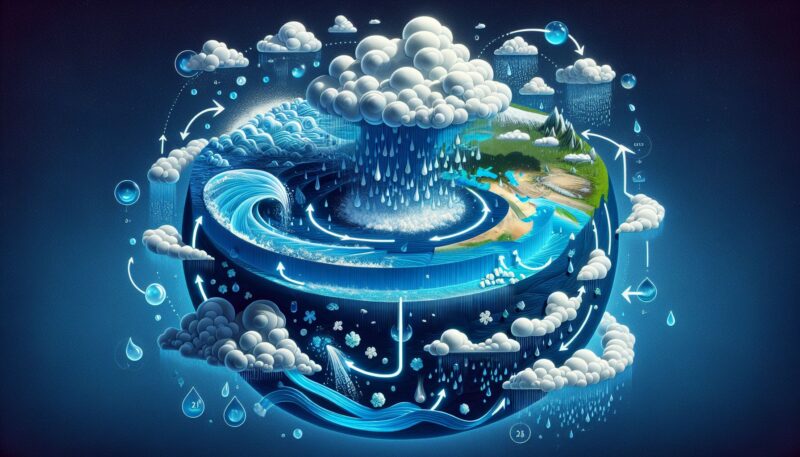
Water is essential to all life on Earth. The continuous movement and transformation of water between the atmosphere, land, and bodies of water are collectively known as the hydrologic cycle, a vital system that has sustained ecosystems, shaped landscapes, and influenced civilizations throughout history. In this article, we will delve deep into the intricate processes of the hydrologic cycle, its crucial role in maintaining the balance of our planet’s hydrosphere, and the challenges that lie ahead due to human impact and climate change.
Introduction to the Hydrologic Cycle
The hydrologic cycle, also known as the water cycle, is a complex system that describes the continuous movement of water on, above, and below the surface of the Earth. This cycle is composed of various key components and processes such as evaporation, transpiration, condensation, precipitation, infiltration, percolation, runoff, streamflow, baseflow, and groundwater movement.
Evaporation
Evaporation is the process by which water changes from its liquid state to vapor. This occurs when energy, usually from the sun, heats the water molecules until they become gaseous. Evaporation primarily takes place in the vast surfaces of the oceans but also occurs in rivers, lakes, and soil moisture.
Transpiration
Transpiration is the process by which plants absorb water through their roots and release water vapor into the atmosphere through small pores known as stomata. This process plays a critical role in the hydrologic cycle by contributing to atmospheric moisture, which will eventually return to the surface as precipitation.
Condensation
Condensation is the change of water from its gaseous form back into liquid. This occurs when warm, moist air rises and cools, causing the water vapor to condense into tiny water droplets, which form clouds, fog, or dew.
Precipitation
Precipitation is the process by which condensed water in the atmosphere falls to the Earth’s surface in various forms, including rain, sleet, snow, hail, or drizzle. Precipitation replenishes freshwater resources and is essential for all terrestrial ecosystems.
Infiltration and Percolation
Infiltration is the process by which water from precipitation or other sources soaks into the soil. Percolation refers to the movement of infiltrated water downwards through soil and rocks. Both processes are critical for recharging aquifers, which are natural underground storage reservoirs of freshwater.
Runoff and Streamflow
Runoff is water, from rain or melting snow, that flows over the Earth’s surface towards streams, rivers, lakes, or the ocean. Streamflow is the actual flow of water in streams and rivers, which plays a major role in shaping the landscape and transporting nutrients and sediment.
Baseflow
Baseflow is the portion of streamflow that comes from groundwater seeping into rivers and streams. This relatively stable source of water maintains river habitats and stream ecosystems, particularly during dry periods.
Groundwater Movement
Groundwater movement is the slow migration of water through the porous spaces and fractures in underground geological formations. Groundwater supplies drinking water for a large portion of the world’s population and sustains streams, rivers, and wetlands through baseflow.
Balancing the Hydrosphere
Understanding the hydrologic cycle is crucial to maintaining the balance of the Earth’s hydrosphere, the total amount of water, including liquid, solid, and vapor, present within the atmosphere, on the surface, and beneath the ground. The hydrosphere itself is interconnected with other Earth systems, particularly the atmosphere, cryosphere, lithosphere, and biosphere. Disruptions to the hydrologic cycle can lead to changes in climate patterns, ecosystem health, and the availability of freshwater resources.
Human Impacts on the Hydrologic Cycle
Human activities, including urbanization, deforestation, agriculture, and industrial processes, have a profound impact on the natural hydrologic cycle. Land-use changes can alter infiltration, increasing runoff, and decreasing groundwater recharge. Pollution from various sources contaminates water bodies, affecting water quality and ecosystem health. Additionally, climate change, driven predominantly by anthropogenic greenhouse gas emissions, is causing alterations in precipitation patterns, intensifying droughts and floods, and accelerating the melting of glaciers and ice caps.
Water Conservation and Management
To address these challenges, it is essential to implement sustainable water management and conservation strategies. Some key practices include:
- Rainwater Harvesting: Capturing and storing rainwater for reuse can mitigate surface runoff and reduce demand on municipal water supplies.
- Greywater Reuse: Treating and reusing wastewater from sinks, showers, and washing machines can conserve freshwater resources and reduce the burden on sewage treatment plants.
- Efficient Irrigation: Employing drip irrigation and other efficient techniques can minimize water wastage in agriculture.
- Protecting Watersheds: Preserving natural landscapes and wetlands within watersheds enhances infiltration, improves water quality, and provides habitat for wildlife.
- Water-Efficient Technologies: Innovations like low-flow fixtures, smart meters, and leak detection systems can reduce water usage in homes and industries.