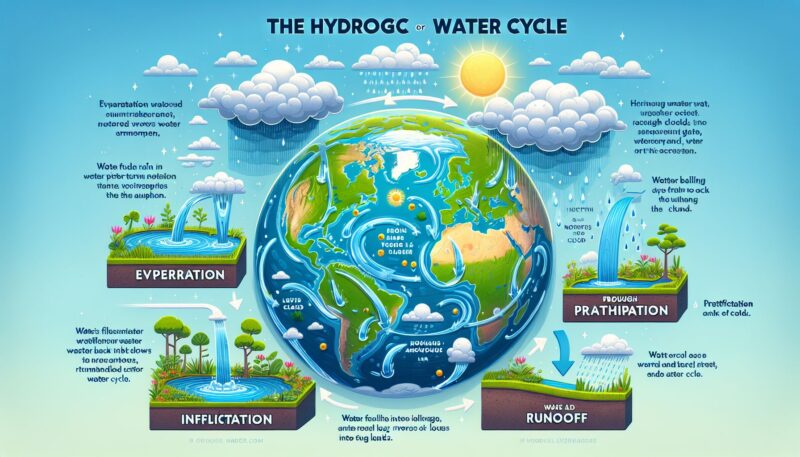
Water is the lifeblood of our planet, a vital substance that supports all forms of life. It’s in a continual cycle of movement and transformation, connecting the oceans, the land, and the atmosphere. This article unfolds the intricate processes of the Hydrologic Cycle, examining each step from evaporation to precipitation and beyond. Additionally, we’ll explore the human impact on water resources and discuss significant environmental challenges related to water quality.
What is the Hydrologic Cycle?
The hydrologic cycle, also known as the water cycle, is a constant and dynamic movement of water within the hydrosphere — Earth’s interconnected system of water bodies. It encompasses the processes of evaporation, transpiration, condensation, precipitation, infiltration, percolation, and runoff.
Evaporation
Evaporation is the transformation of water from its liquid form to vapor. This process requires energy, usually from the sun, and occurs primarily from bodies of water, such as oceans, lakes, and rivers. It also happens from the land surface and vegetation.
Transpiration
Transpiration is closely related to evaporation; it’s the process by which water is absorbed by plant roots, moves up through the stems, and is released into the atmosphere from the leaves.
Condensation
Condensation is the process that transforms water vapor into liquid water. This occurs when warm, moist air rises and then cools, leading to the formation of clouds.
Precipitation
When cloud particles become too heavy to remain suspended in the air, they fall to the Earth as precipitation in the form of rain, sleet, snow, or hail.
Infiltration and Percolation
Infiltration is the process by which precipitation soaks into the soil. Some of this water percolates downward through soil and rock layers to recharge groundwater and aquifers.
Runoff and Streamflow
Runoff is water that flows over the surface of the land, often reaching rivers and lakes. Streamflow is the flow of water in streams and rivers, propelled primarily by gravity and influenced by precipitation, groundwater discharge, and other factors.
Baseflow
Baseflow is the portion of the streamflow that is sustained between precipitation events, fed by groundwater seeping into the riverbed.
Groundwater and Aquifers
Groundwater is the water that fills the cracks and spaces in underground soil and rock layers. Aquifers are the permeable rock formations that hold and transmit groundwater.
Recharge and Discharge
Recharge is the process of water percolating down from the land surface, replenishing an aquifer. Discharge means the flow of groundwater into surface water bodies, such as streams and lakes.
Each step in the hydrologic cycle is crucial to maintaining the balance of water on Earth. Changes and disruptions in one stage can have cascading effects on the entire cycle.
Human Impact on the Hydrologic cycle
Human activities, including agriculture, urban development, and industrial processes, significantly influence the hydrologic cycle.
- Agriculture: The irrigation of crops can deplete surface water and groundwater reserves, altering natural flow patterns and impacting local ecosystems.
- Urban Development: Cities with impervious surfaces, such as concrete and asphalt, reduce infiltration, increase runoff, and can lead to flash floods.
- Industrial Processes: Manufacturing and mining can consume vast quantities of water, and contribute to pollution, affecting water quality and availability.
Challenges to Water Resources
Several challenges pose a threat to the stability and health of the hydrologic cycle.
Water Pollution
Pollution from various sources, including industrial waste, agricultural runoff, and untreated sewage, can lead to a decline in water quality. Sources of pollution include:
- Nutrients: Excessive nutrients from fertilizers can cause eutrophication and algal blooms.
- Heavy Metals: Industrial discharges can introduce metals like mercury and lead into water systems.
- Pathogens: Bacteria and viruses from sewage and animal waste can contaminate water.
Climate Change
Climate change can alter precipitation patterns, causing more severe droughts and floods. It affects snowpack and glacier melt, which can disrupt the temporal distribution of water.
Water Scarcity and Stress
Water scarcity is increasingly common due to overuse and depletion of resources. Water stress occurs when the demand for water exceeds the available amount during a certain period, or when poor quality restricts its use.
Solutions and Sustainable Practices
To protect our water resources and the hydrologic cycle, embracing sustainable water practices is essential.
- Water Conservation: Simple measures like fixing leaks and using water-efficient appliances can significantly reduce wastage.
- volcanic activity, altering water sources and ecological systems.
- Greywater Reuse: Treating and reusing greywater for irrigation and flushing toilets can decrease freshwater demand.
- Rainwater Harvesting: Collecting and storing rainwater can provide an alternative water source and reduce runoff.
Conclusion
The hydrologic cycle is a complex and dynamic system vital to life on Earth. Human activities have disrupted this natural cycle, leading to various environmental challenges. By understanding the processes involved and taking action to mitigate negative impacts, we can work towards securing water resources for future generations.
References
- “Water Cycle.” USGS Science School. https://www.usgs.gov/special-topics/water-science-school/science/water-cycle
- “Hydrologic Cycle.” National Weather Service. https://www.weather.gov/hic/hydrologic_cycle
- “Water Resource Management.” United Nations Environment Programme. https://www.unep.org/resources/report/global-environment-outlook-6
Understanding and preserving the hydrologic cycle is fundamental for sustaining life. As we continue to encounter water-related challenges, such as pollution, scarcity, and the effects of climate change, it’s vital to promote research, education, and policy measures that protect this invaluable cycle and, by extension, our future.