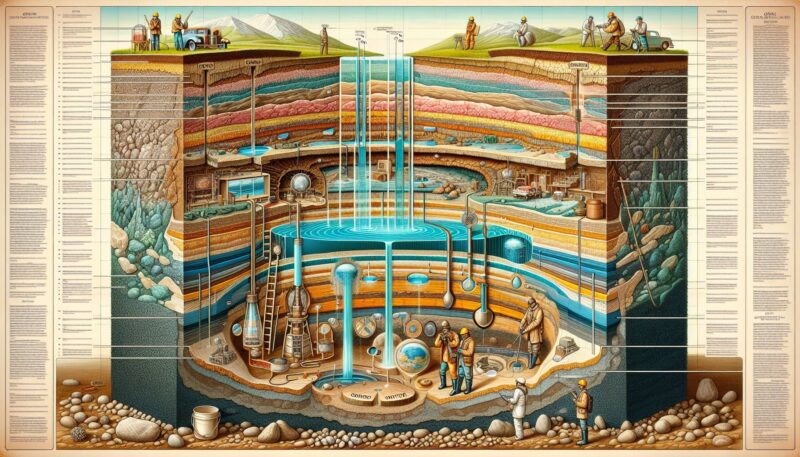
Groundwater is one of Earth’s most crucial and frequently misunderstood resources. This invisible treasure, found beneath the Earth’s surface, plays a vital role in supporting ecosystems, human livelihoods, and economic development. In this exploration, we will delve deep into the concept of groundwater – its origins, significance, vulnerabilities, and the challenges associated with its management and preservation.
Introduction
Beneath our feet lies a vast resource that is essential for life but often goes unnoticed. Groundwater is the water found in the pores and fractures of soil, sand, and rock, which constitutes the largest source of fresh usable water on the planet, barring the water locked up in glaciers and polar ice caps. It is a critical component of the Earth’s hydrosphere and is central to the hydrologic cycle.
Understanding groundwater’s journey, from precipitation to the kitchen tap, and the threats it faces, is fundamental to ensuring its sustainability for future generations. Throughout this article, we will uncover the intricacies of groundwater – from its scientific principles and benefits to the human-induced challenges that threaten its quality and existence.
What is Groundwater?
Groundwater is part of the hydrologic cycle, an incredible system where water is in constant motion between the land, ocean, and atmosphere. When rain falls or snow melts, some of the water flows over the land’s surface as runoff, eventually entering rivers and lakes. However, a sizable portion seeps beneath the surface in a process known as infiltration.
Infiltration and The Journey Underground
When water infiltrates the soil, it moves down through the void spaces or cracks within sediments and rock formations in a process known as percolation. As the water percolates deeper, it reaches a point where all the openings in the rocks and sediment are completely filled with water – this is referred to as the ‘saturated zone.’ The top of this zone is called the water table. Below the water table, in these saturated conditions, lies groundwater.
Aquifers: Nature’s Underground Storage Tanks
Aquifers are geological formations capable of storing and yielding significant quantities of groundwater. These formations can be comprised of gravel, sand, sandstone, or fractured limestone and dolomite, and they effectively act as natural underground reservoirs.
Two major types of aquifers exist:
- Unconfined Aquifers – where water seeps directly from the ground surface, and is more susceptible to surface contamination.
- Confined Aquifers – which are covered by a layer of less permeable material and are therefore generally more protected from the surface influences.
Recharge and Discharge
The groundwater system is dynamic, with a continuous exchange of water between the surface and the subsurface. ‘Recharge’ occurs when water infiltrates the soil and adds to the groundwater reservoir, while ‘discharge’ happens when groundwater emerges back at the surface, often becoming part of streams, lakes, or wetlands, or being extracted by roots for plant use.
The Significance of Groundwater
Groundwater’s role is not just pivotal in maintaining the natural landscape; it is also essential in supporting human settlements and activities.
Supporting Ecosystems
Groundwater is a primary source of water for vegetation in many arid and semi-arid regions. It contributes to the baseflow of rivers and helps maintain river flows during dry seasons, supporting aquatic habitats and wildlife.
Human Consumption and Use
An estimated 2.5 billion people depend directly on groundwater for their drinking water. Additionally, it is crucial for agriculture and industry, providing about 40 percent of water used for irrigation worldwide and supporting various industrial processes.
Economic Significance
Groundwater contributes significantly to the global economy. It is often a more reliable and cost-effective source of water compared to surface waters, particularly in regions where seasonal variability in rainfall is high.
Threats to Groundwater
Despite its importance, groundwater is facing an array of threats that jeopardize its quality and sustainability.
Over-Extraction
Human demand for water has led to the excessive drawing of groundwater, causing declining water tables, land subsidence, and reduced water flow to the natural environment. The over-extraction can lead to the depletion of this invaluable resource.
Contamination
Groundwater is susceptible to contamination from various sources, including industrial waste, agricultural runoff, and improper waste disposal. Contaminants like heavy metals, pathogens, nutrients, and microplastics can pose serious health risks and degrade water quality.
Climate Change
As climate patterns shift, alterations in precipitation and increased evaporation rates can disrupt the recharge rates of aquifers, exacerbating the problems related to water scarcity and stressing groundwater systems.
Water Quality Indicators
To understand groundwater quality, several indicators are typically measured:
- Dissolved Oxygen: Indicates the amount of oxygen available for aquatic life and the breakdown of pollutants.
- pH: A measure of the water’s acidity or alkalinity, which can affect metal solubility and toxicity.
- Turbidity: The clarity of the water, which can be affected by suspended solids.
- Salinity: The concentration of dissolved salts, which can affect crop growth and potability.
- Hardness: Determined by the concentration of calcium and magnesium, affecting the water’s ability to cause scaling and its taste.
Managing Groundwater Sustainably
Responsible management of groundwater is crucial for its long-term viability. This involves understanding and integrating the following components:
Implementing Integrated Water Resources Management (IWRM)
IWRM is a process that promotes the coordinated development and management of water, land, and related resources in order to maximize economic and social welfare without compromising the sustainability of ecosystems.
Adopting Water Conservation Measures
Efforts to reduce water waste, such as practicing efficient irrigation techniques or reusing greywater, can alleviate pressure on groundwater sources. Rainwater harvesting is another method to supplement water supply and reduce groundwater dependency.
Enhancing Water Treatment Technologies
Advanced water treatment methods like reverse osmosis, ozonation, and UV irradiation can play a pivotal role in ensuring the cleanliness and safety of groundwater before it is consumed or used.
Legal and Regulatory Frameworks
Effective legislation and regulations are essential to control groundwater extraction, protect recharge areas, and prevent contamination from human activities.
Public Education and Participation
Raising awareness about groundwater’s importance among communities and stakeholders is vital in fostering a culture of conservation and responsible use.
Monitoring and Research
Continued research and monitoring of groundwater are necessary for understanding its behavior, assessing risks, and developing appropriate management strategies.
Conclusion
Groundflow is the cornerstone of our natural and human systems. Its silent existence belies its significant role as an environmental stabilizer and a lifeline for millions. To safeguard this precious resource, it is imperative that governments, communities, and individuals adopt a unified approach emphasizing conservation, efficient use, and advanced management strategies.
As we race to meet the demands of an expanding population and grapple with the complexities of a changing climate, the protection and sustainable management of groundwater have never been more critical. This hidden resource is a legacy that we must preserve and nurture, not only for our survival but for the prosperity of generations to come.
Sources
- “Groundwater.” U.S. Geological Survey. https://www.usgs.gov/special-topic/w